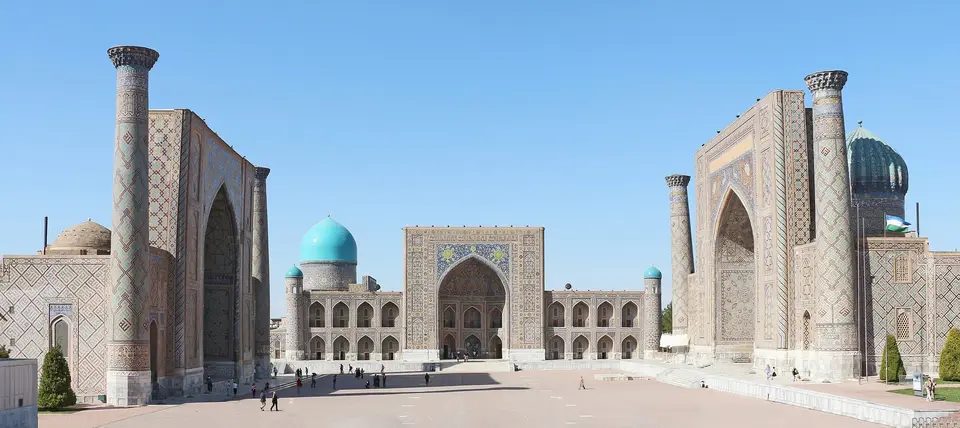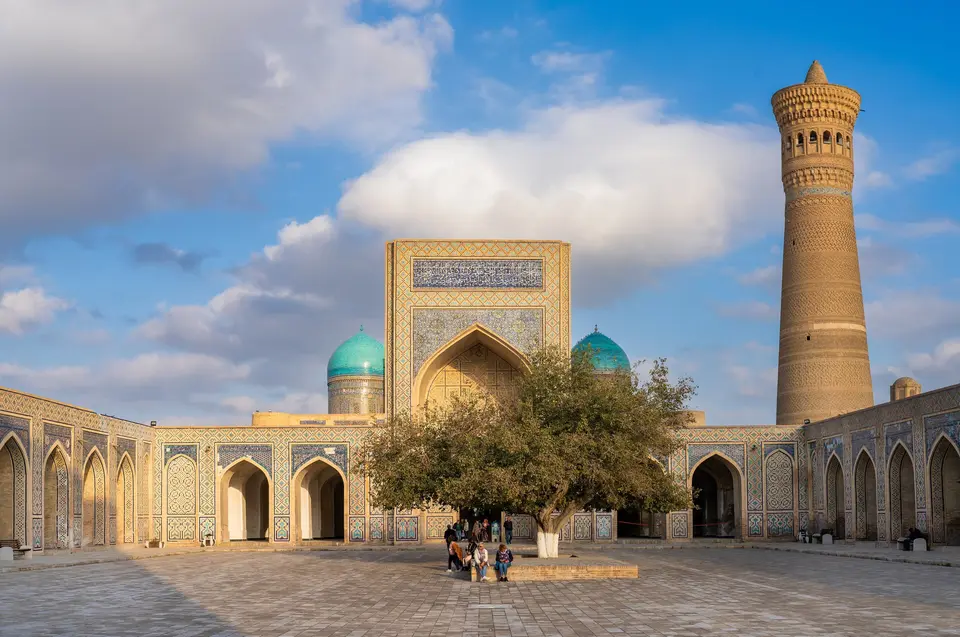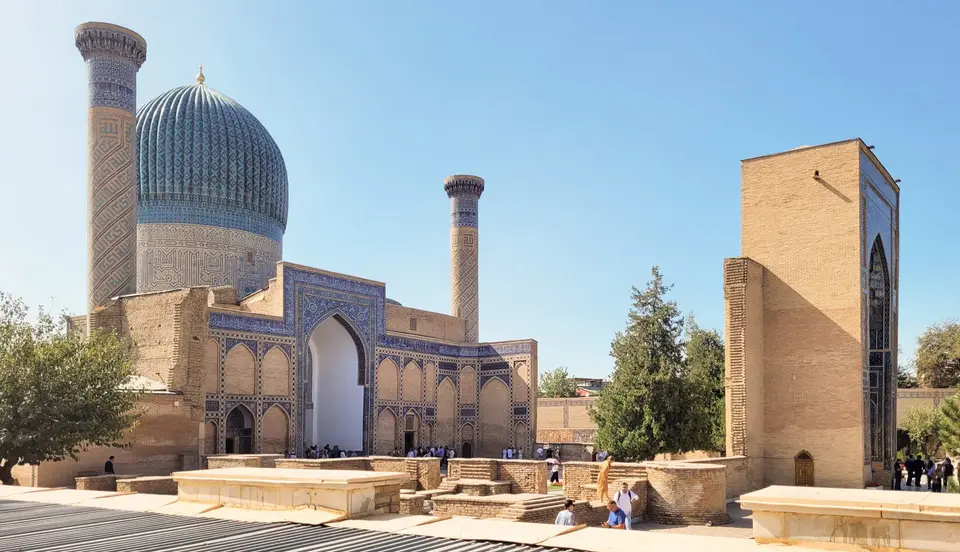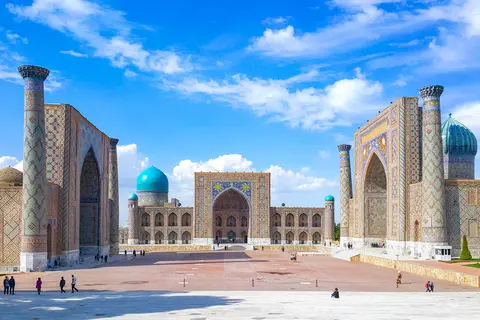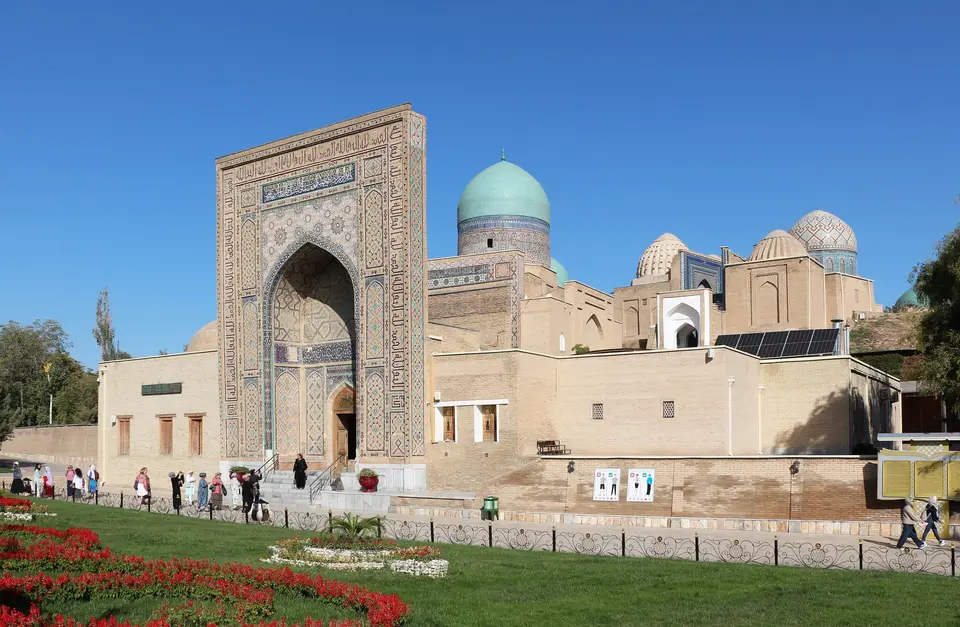
The old cities of Uzbekistan are full of words that are new to most travellers. Here are the ones you will hear most often.
Buildings
- Madrasa — a religious school, built around a courtyard with student rooms (hujra) on one or two floors. Many now house craft shops.
- Mosque — masjid in Uzbek. A Juma (Friday) mosque is the main congregational mosque of a city.
- Minaret — the tower from which the call to prayer was made, also used as a landmark and watchtower.
- Mausoleum — a monumental tomb, often with a dome over the burial chamber.
- Khanaka — a lodge for Sufi dervishes, with a large hall for gatherings.
- Caravanserai — an inn for travelling merchants and their animals.
- Ark — a citadel or fortress, the seat of the ruler, as in Bukhara's Ark.
- Hauz — a pool or reservoir, as in Bukhara's Lyabi-Hauz.
- Toq / tim — covered trading domes and arcades, like the domes of Bukhara.
Parts of a building
- Pishtaq — the tall entrance portal framing an arch, the classic "front" of a madrasa or mosque.
- Iwan (ayvan) — a vaulted hall open on one side, or a columned veranda.
- Dome — often a double dome: a tall decorative outer shell over a lower inner one.
- Mihrab — the niche showing the direction of prayer.
Decoration
- Majolica — painted glazed tiles.
- Mosaic — patterns made of many small pieces of glazed tile.
- Girih — geometric star-and-polygon patterns.
- Kufic script — angular Arabic calligraphy, often worked into brick patterns.
- Ganch — carved plaster, often painted, used inside buildings.
- Carved wood — doors and columns, a speciality of Khiva.
Use the words on your tour
Ask your guide to point out each element — once you know them, you will start reading every façade you see.