Amir Timur (1336–1405), known in the West as Tamerlane, is the most famous figure in Uzbek history. He built one of the largest empires of his age, and he made Samarkand its glittering capital. Today he is a national symbol in Uzbekistan, and his name appears on squares, streets and museums.
Who was he?
Timur was born near Kesh, today's Shakhrisabz, south of Samarkand. Over decades of campaigns he conquered lands from Anatolia to northern India. His armies were feared — but he also brought architects, artisans and scholars from across his empire to build in Samarkand.
Shakhrisabz — his home town
- Ak-Saray — the remains of his vast summer palace, with a gate arch of enormous size.
- Dorus Saodat — the memorial complex for his family, including a crypt that was prepared for Timur himself.
- Kok Gumbaz — a mosque built by his grandson Ulugbek.
Samarkand — his capital
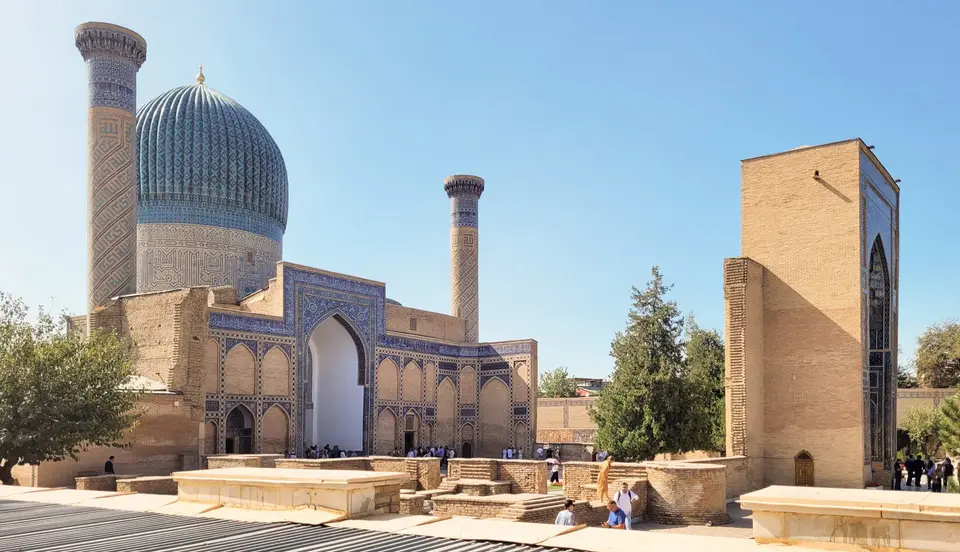
- Gur-e-Amir — the mausoleum where Timur is buried, with his sons and grandson Ulugbek.
- Bibi-Khanym mosque — the huge Friday mosque built after his Indian campaign.
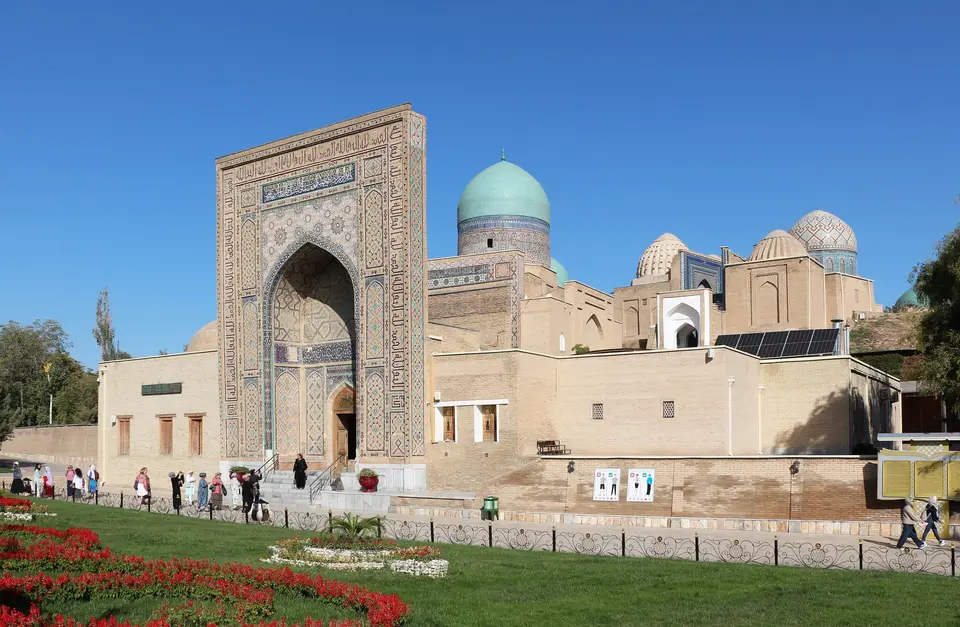
- Shah-i-Zinda — the necropolis where many of his relatives and nobles were buried.
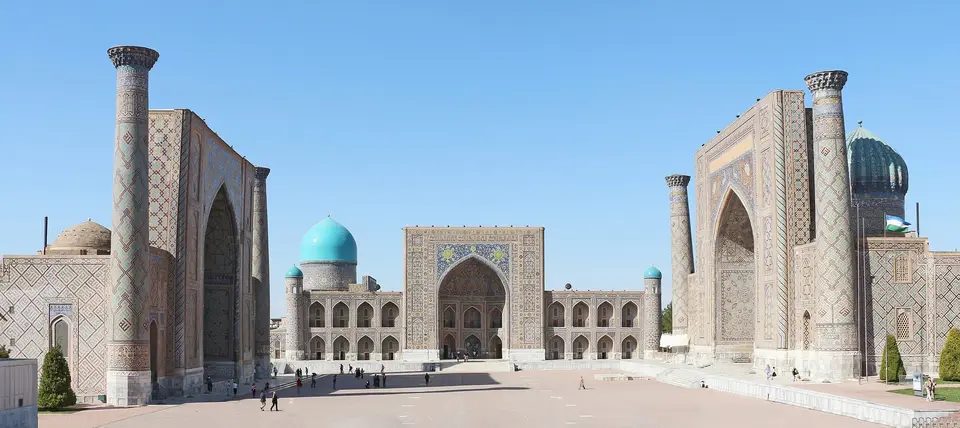
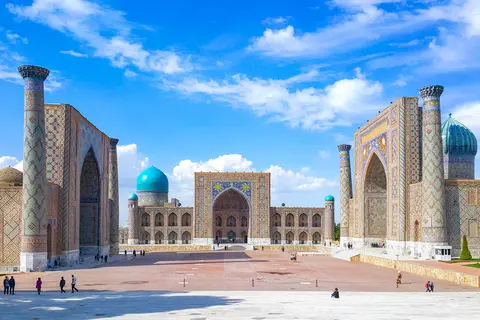
- Registan — built after Timur by his grandson Ulugbek and later rulers.
Tashkent
The Amir Timur square with its equestrian statue, and the State Museum of the Timurids, tell the story of Timur and his dynasty for modern Uzbekistan.
Ulugbek — the scholar grandson
Timur's grandson Ulugbek ruled Samarkand in the 15th century and built an observatory whose star catalogue was famous for its accuracy. The remains of its great instrument can still be seen in Samarkand.
Following his story with a guide
A day in Samarkand and a day trip to Shakhrisabz together cover almost all of Timur's major sites. See our Samarkand city tour and Shakhrisabz day trip.