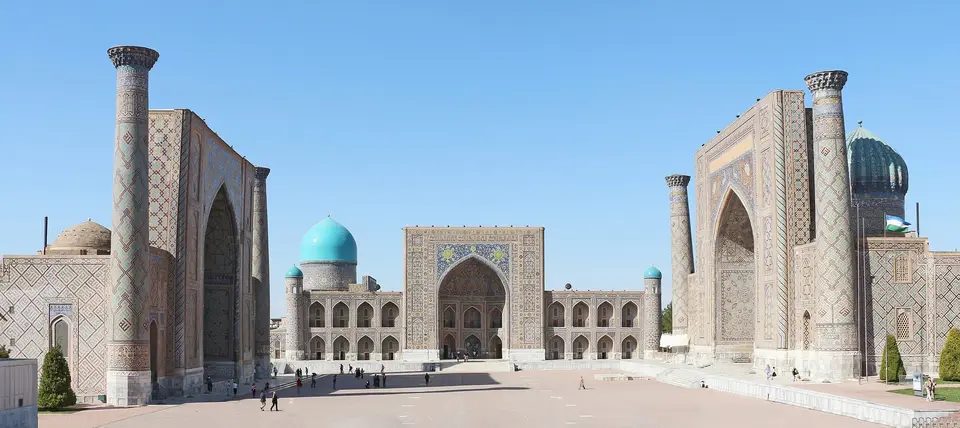
You do not need to know history to enjoy Uzbekistan — but a little background makes every monument come alive. Here is the story in brief.
Oasis cities between deserts
The land between the Amu Darya and Syr Darya rivers has been settled for thousands of years. Its oases — Samarkand, Bukhara, Khorezm and the Fergana Valley — became stops for caravans travelling between China, India, Persia and the Mediterranean.
Sogdian merchants
In the first millennium AD, merchants from Sogdiana, around Samarkand and Bukhara, were among the great traders of the Silk Road. The site of Afrosiyob, old Samarkand, still shows traces of their city and its famous wall paintings.
Arab conquest and the Samanids
In the 8th century Arab armies brought Islam to the region. Under the Samanid dynasty (9th–10th centuries), Bukhara became a great centre of learning. The Samanid mausoleum in Bukhara is one of the oldest surviving buildings of the period.
Scholars of the golden age
The region produced famous scholars, among them the mathematician al-Khwarizmi from Khorezm, whose name gave us the word "algorithm", and Ibn Sina (Avicenna), who was born near Bukhara.
The Mongols
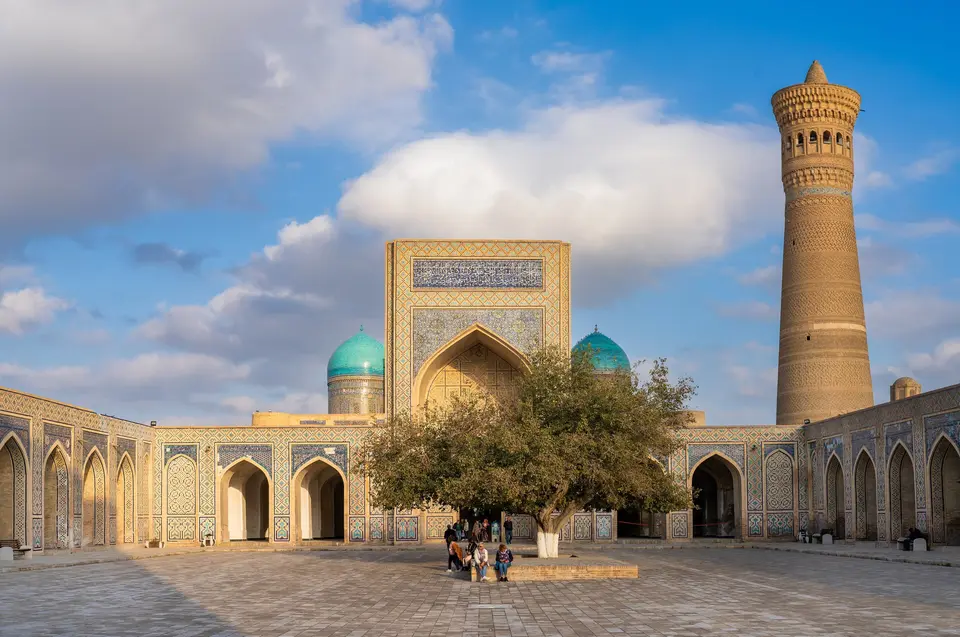
In 1220 Genghis Khan's armies destroyed Bukhara, Samarkand and Urgench. Many cities took generations to recover; the tall Kalon minaret in Bukhara is one of the few landmarks said to have been spared.
Amir Timur and the Timurids
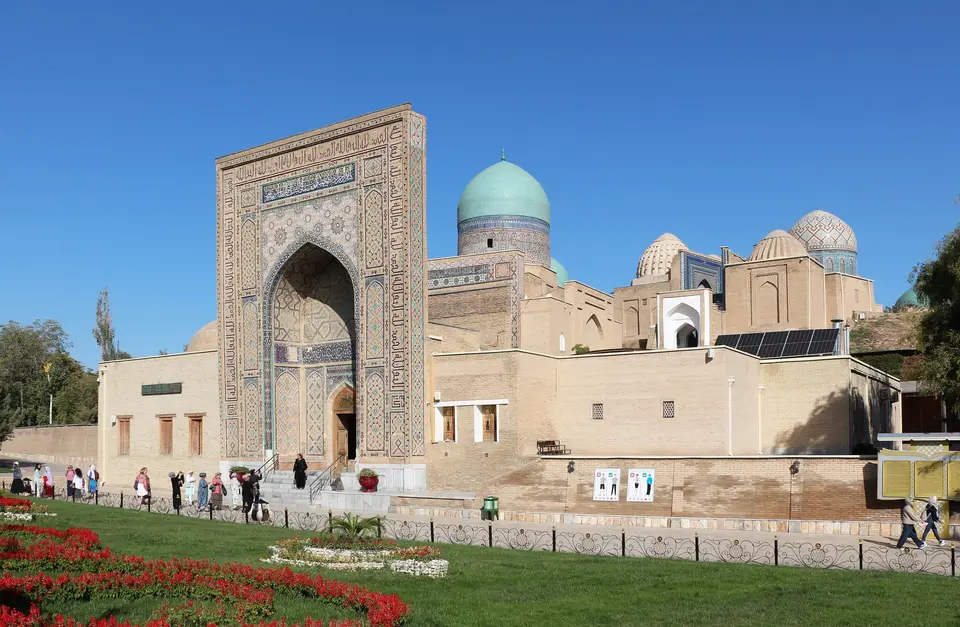
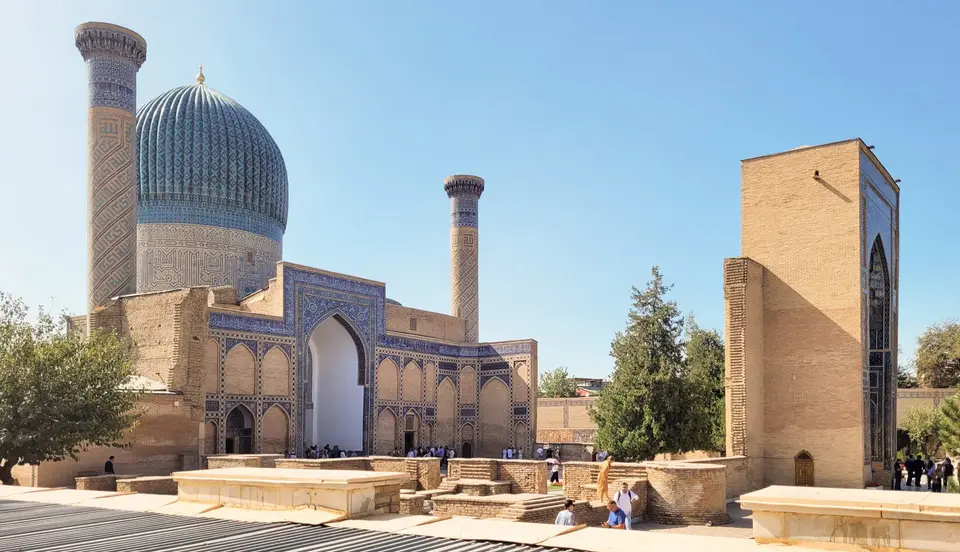
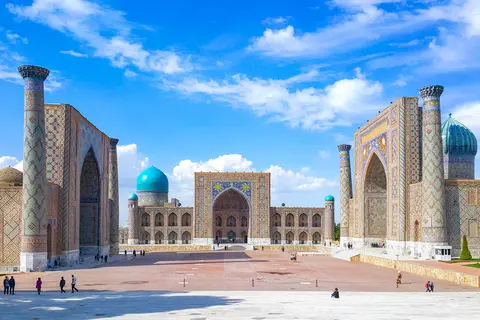
In the 14th century Amir Timur (Tamerlane) built an empire from Samarkand, bringing craftsmen from conquered lands to build Bibi-Khanym, Shah-i-Zinda and Gur-e-Amir. His grandson Ulugbek ruled Samarkand as a scholar-king and built his famous observatory. Read more in our article on Amir Timur.
The khanates
From the 16th century the region was divided into rival states — the khanates of Bukhara, Khiva and later Kokand. Much of what you see in old Bukhara and almost all of Khiva's Itchan Kala dates from these centuries.
Russian rule and independence
In the 19th century the Russian Empire conquered the region, and in the 20th century it became part of the Soviet Union, as the Uzbek SSR. Uzbekistan became independent in 1991.
Seeing it with a guide
Each city tells a different chapter: Samarkand the Timurids, Bukhara the scholars and merchants, Khiva the last khanates, Tashkent the modern era. A good guide connects them into one story.