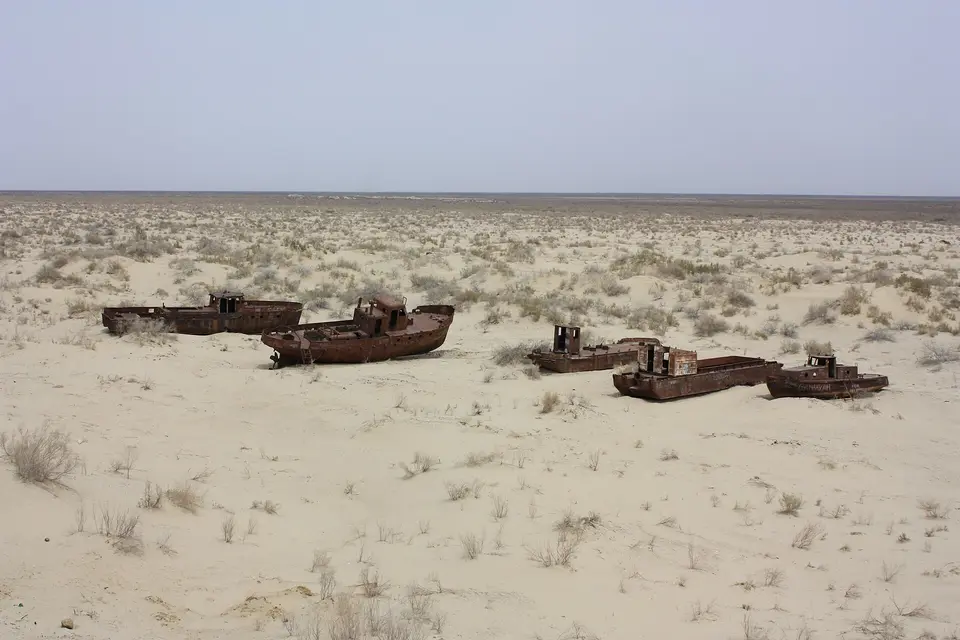
Rusting ships standing in the desert at Moynaq have become a symbol of one of the world's worst environmental disasters. Here is what happened to the Aral Sea.
A sea in the desert
The Aral Sea was a huge inland lake, once among the largest in the world, fed by two great rivers: the Amu Darya and the Syr Darya. Fishing towns like Moynaq lived from it, and fish from the Aral was sent across the Soviet Union.
Why it shrank
From the 1960s, large amounts of water from both rivers were diverted to irrigate cotton and other crops across Central Asia. With much less water reaching it, the sea began to shrink, fast. Over the following decades it split into separate parts, and much of the former seabed became desert.
The consequences
The shoreline moved far away from the old ports, and the fishing industry collapsed. Winds now lift salt and dust from the exposed seabed, and the local climate has become harsher. The people of Karakalpakstan have lived with the effects for decades.
Moynaq today
Moynaq was once a port. Today the ship cemetery — old fishing boats left on the former seabed — and the local museum tell the story. A memorial on the old shore shows where the water once was. The town is working to tell its story to visitors.
How to visit
Moynaq is reached by road from Nukus, the capital of Karakalpakstan. A day trip with a guide and car lets you see the ship cemetery and museum and hear the story from people who know it. See our Moynaq day trip from Nukus. Reaching the current shoreline itself is a much longer, off-road expedition.
Combine with Nukus
In Nukus, the Savitsky Museum holds one of the most remarkable art collections in Central Asia — read our article on the Savitsky collection.